

The High Court has dismissed a challenge brought by Wikipedia’s operator against Online Safety Act categorisation thresholds but left open the possibility for future legal action.
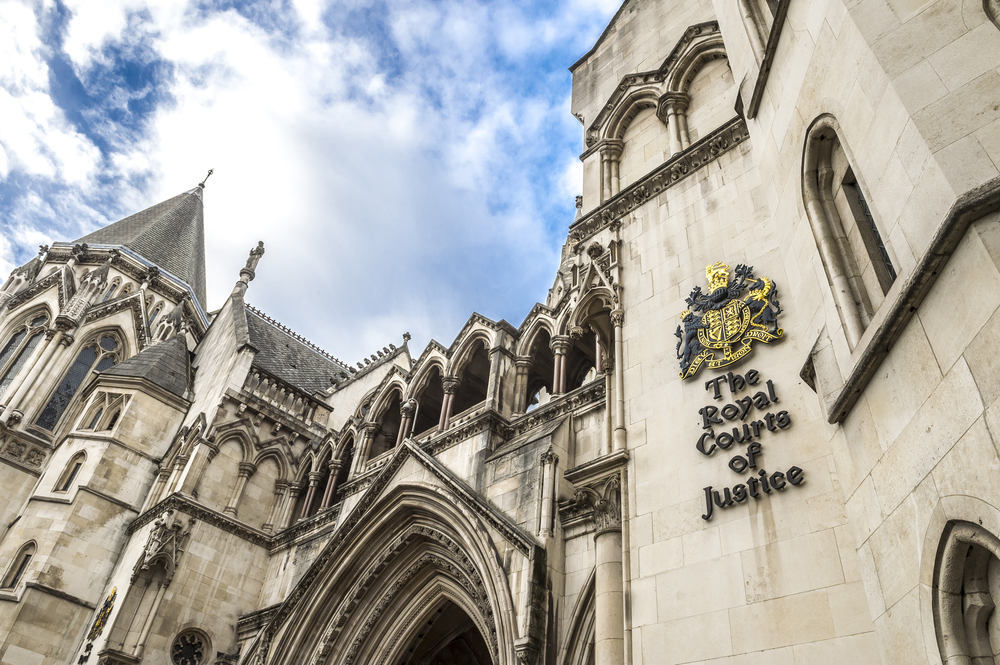
Shutterstock.com/lazyllama
The Wikimedia Foundation in May sought a judicial review of the Online Safety Act’s categorisation rules, alleging that they would place the online encyclopaedia at the highest category of risk and wrongly subject it to onerous duties intended for the most harmful social media platforms. It argued that the UK Secretary of State for Science, Innovation and Technology failed to comply with statutory duties when making the rules, adding that the adopted criteria were irrational and interfered with its human rights.
Mr Justice Jeremy Johnson today rejected Wikipedia’s attempts to overturn the thresholds but said the foundation could bring further legal action if regulator Ofcom ultimately concludes Wikipedia is a category 1 service. He noted that the dismissal does not give the regulators “a green light to implement a regime that would significantly impede Wikipedia’s operations.”
Linklaters partner Ben Packer said that although the government won this case, “given the breadth of the Online Safety Act and the difficult trade-offs when it comes to online safety and free expression, we can expect future challenges to the implementation of this law.”
Court findings
Mr Justice Johnson said today that the Secretary of State did, as required under schedule 11 of the act, consider the impact of a service’s functionalities on the viral dissemination of content when specifying category 1 threshold conditions. Based on Ofcom’s advice, the regulator had set criteria which considers services’ active user numbers, the use of content recommender systems and forward share functionalities.
Wikipedia counsel Rupert Paines had argued in court last month that the adopted definition was overinclusive, capturing services which do not contain characteristics justifying category 1 status. He noted that Wikipedia is an example of a service that has a large user base, a recommender system and share functionalities which do not necessarily contribute to quick and wide content dissemination.
But Mr Justice Johnson noted that the Secretary of State is only required to assess the “likely” impact of functionalities on content dissemination at a high level, and such assessment must apply across the “entire universe” of online regulated services. “It was not necessary (or practical, or possible) for the Secretary of State to work through all the different possible permutations,” the judge said.
“Nothing in the statutory language implies” that the regulator must consider “each different functionality of each different service in each different sector”, to determine the precise impact of a particular functionality on content dissemination or to consider the different ways in which individual functionalities might operate, he added.
The court further concluded that the fact that the criteria may capture services that do not give rise to viral dissemination does not mean they are irrational.
“If there was some basic logical flaw in the reasoning which robbed the decision of its logic, then it was a flaw that seemingly evaded the expert regulator, experienced policy officials, the Minister and the Secretary of State (and the previous Secretary of State),” Mr Justice Johnson said. He noted that while the criteria are not perfect, no party has suggested a better alternative.
The online encyclopaedia had notably argued in its claim that the categorisation would violate the European Convention on Human Rights, for example by forcing the platform to identify each of its users. It noted that such verification requirements would disrupt its model, forcing it to either restrict access to the service or implement unworkable changes.
But the High Court judge ruled that these grounds must be dismissed as Wikipedia was unable at this stage to demonstrate it was a victim under the convention. He noted that the threshold definition may be interpreted in a way that does not capture Wikipedia; even if it turns out that Wikipedia falls under category 1, it does not necessarily follow that this will lead to a breach of human rights, Mr Justice Johnson said.
Counsel to the department Cecilia Ivimy KC had noted last month that the wider legislative framework, which is still being developed, encompasses detailed codes of practice and is designed to ensure duties are imposed in a way which is proportionate and safeguards convention rights.
“Silver linings”
“Overturning the categorisation thresholds was always going to be a tall order for Wikimedia,” said Linklaters partner Packer. While it was unsurprising that the court dismissed the judicial review of the regulations, there are “silver linings in the judgement for Wikimedia and for the broader tech industry,” he said.
The court had noted that if Ofcom designates the online encyclopaedia as a category 1 then the claimants have remedy by way of judicial review. It added that if such a designation results in Wikipedia no longer being able to operate, the Secretary of State “may be obliged to consider” whether to amend the regulations or exempt categories of service from the act, Mr Justice Johnson added.
The judgment more broadly demonstrates that “courts are likely to be receptive to arguments about how the duties under the Online Safety Act could impede free expression, even indirectly,” Packer noted.
Reed Smith partner Elle Todd said the “real question” will be what happens when Ofcom makes its categorisation decisions given the assertion that such decisions could be liable for separate legal actions. “With such decisions pending soon, we could see further challenges from large online services ahead,” Todd added.
Counsel to Wikimedia Foundation
11KBW
Rupert Paines and Raphael Hogarth in London
Pinsent Masons
Partner David Barker in London is assisted by Meghan Higgins and Gemma Erskine
Counsel to the Secretary of State for Science, Innovation and Technology
11 KBW
Cecilia Ivimy KC, Ruth Kennedy and Joseph Lavery in London