

Trump’s first international tariff dispute is a stark reminder to companies to prepare contingency plans and diversify their supply chains.
Shutterstock.com/esfera
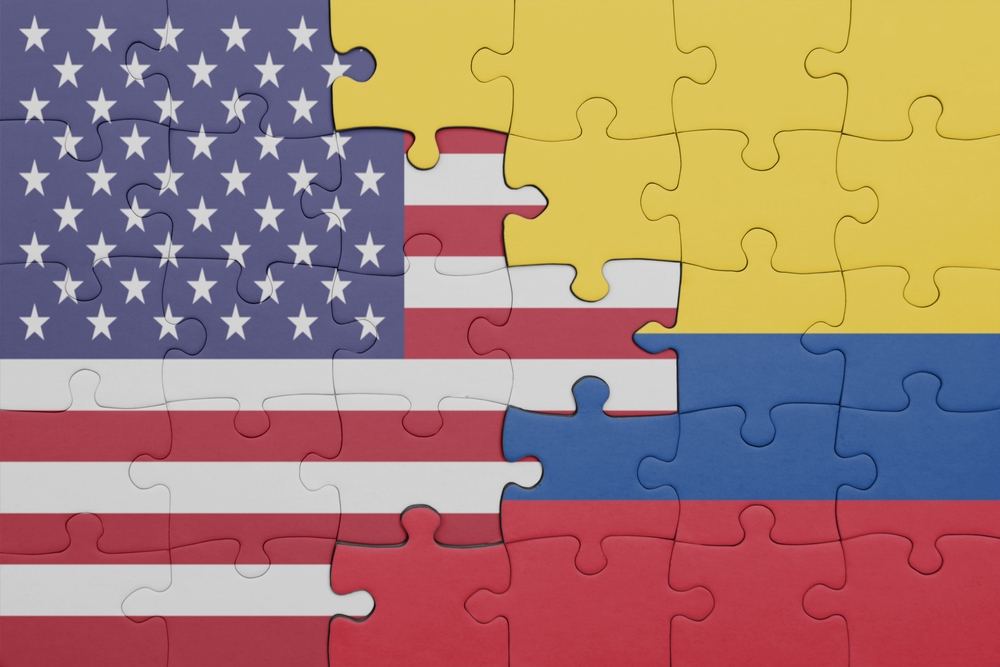
Colombian president Gustavo Petro provoked President Donald Trump’s ire when he refused to accept repatriation flights carrying deported migrants (Spanish language only) on 26 January 2025.
Less than a week into his second term in office, Trump responded by threatening 25% tariffs, with increases to 50% within a week, on all Colombian goods entering the US.
US Secretary of State Marco Rubio suspended visa issuances at the US embassy in Bogotá and authorised travel sanctions on Colombian government officials and their families.
Although Colombia agreed to Trump’s terms, US press secretary Karoline Leavitt clarified on 26 January 2025 that “visa restrictions will remain in place until the first planeload of Colombian deportees is successfully returned.”
On 27 January 2025, Speaker of the US House of Representatives Mike Johnson wrote on X that “Congress is fully prepared to pass sanctions and other measures against those that do not fully cooperate or follow through on requirements to accept their citizens who are illegally in the United States.”
The fall-out sends a warning to other world leaders, whether allies or adversaries: cooperate with the new US administration or face the consequences.
The US may still apply tariffs and sanctions to other nations that resist Trump’s hardline immigration policy. Lexology PRO lays out how companies can prepare.
How can businesses prepare for possible sanctions?
Trump made changes to the US sanctions regime – including putting Cuba back on the list of state sponsors of terrorism – when he began his second tenure in the White House.
International trade experts have advised businesses to have a plan B in case customers or suppliers are sanctioned under unexpected measures from the new US government (Portuguese language only).
In-house legal and compliance teams should identify which sanctions regimes are relevant to their business and address any conflicting obligations. Businesses should then take the following steps to prepare for potential disruption caused by the new administration:
Diversify supply chains
Companies should move away from exclusive arrangements or mandatory minimum purchase clauses in their supply contracts and instead implement clauses allowing them to diversify their sources if a specific supplier is unable to meet demand, for instance following sanctions. Businesses should ensure they have secondary suppliers in the chain who understand and meet business needs.
Conduct regular risk assessments
Businesses should use risk assessments to identify vulnerabilities and mitigate the impact of breaching a sanctions regime.
Technology can support real-time supply chain monitoring to identify and assess risks. Additional tools can map and indicate levels of risk within different countries and industries to quantify and visualise risk.
Regular risk assessments will help businesses detect operational areas exposed to sanction violations amid a changing environment. These assessments should identify the touchpoints of contact with sanctioned legal entities, countries, individuals, or regions.
Update and adequately resource sanction screening systems
Businesses must comply with all relevant sanctions regimes and adopt sanction screening systems to identify clients, partners, customers, or third-parties subject to sanctions.
Sanctions screening software is integral to spotting changes to relevant designated persons lists, such as the US Office of Foreign Asset Control’s (OFAC) specially designated nationals list.
A proactive approach to sanctions monitoring helps businesses stay compliant and avoid potential penalties.
Read more content related to Trump’s first week in office, including his slashing of Biden-era ESG policies and threats of private sector probes over diversity, equity and inclusion.