

US President Donald Trump’s “reciprocal” tariffs apply at different rates depending on the US government’s perceived trade imbalance with trading partners. The rates range from a “minimum baseline” of 10% to 49%.
White House
Trump celebrated “Liberation Day in America” today by sharing new details on his plan for imposing reciprocal tariffs on US trading partners. How the reciprocal tariffs will work has remained an open question since Trump announced them on 13 February 2025.
In today’s address from the White House Rose Garden, Trump announced a country-by-country approach to implementing reciprocal tariffs, with a “minimum baseline tariff of 10%” applicable to goods from the UK, Brazil and Singapore, among others.
Higher rates, generally about half the rate charged on US goods, apply to other trading partners. For example, in response to China’s 67% tariff rate, the US will impose a “discounted reciprocal tariff” of 34%. Similarly, the US will impose a 20% tariff on EU goods in response to a 39% tariff rate and a 24% tariff to match Japan’s 46%.
White House press secretary Karoline Leavitt said on 1 April 2025 that “President Trump’s economic vision is rooted in common sense.” She added that “America will offer companies the lowest taxes, energy costs [and] regulations if they make their products right here in the United States and hire American workers for the job. It’s simple. If you make your product in America, you will pay no tariffs.”
Both Leavitt and Trump highlighted several recently announced, large investments from OpenAI’s Project Stargate, Apple, Nvidia and TSMC as examples of Trump’s trade policy in action. Trump also mentioned investments from various automakers like Toyota and Hyundai.
The investments appear to align with US Secretary of Commerce Howard Lutnick’s statement during a CBS Evening News interview on 11 March 2025 that the Trump administration aims to “create tradecraft” in high-tech factories.
The US president’s “Fair and Reciprocal Plan” aims to reduce US trade deficits and address other aspects of US trade relations that he characterised in the 13 February memo to senior trade advisors as “unfair and unbalanced.” He said his administration will “counter non-reciprocal trading arrangements with trading partners by determining the equivalent of a reciprocal tariff with respect to each foreign trading partner.”
Trump’s America First Trade Policy – the foundation on which the reciprocal tariff memo is built – instructed the president’s trade advisors to provide reports on various aspects of US trade, including the causes of trade deficits and the feasibility of establishing a new federal agency to collect tariffs and duties.
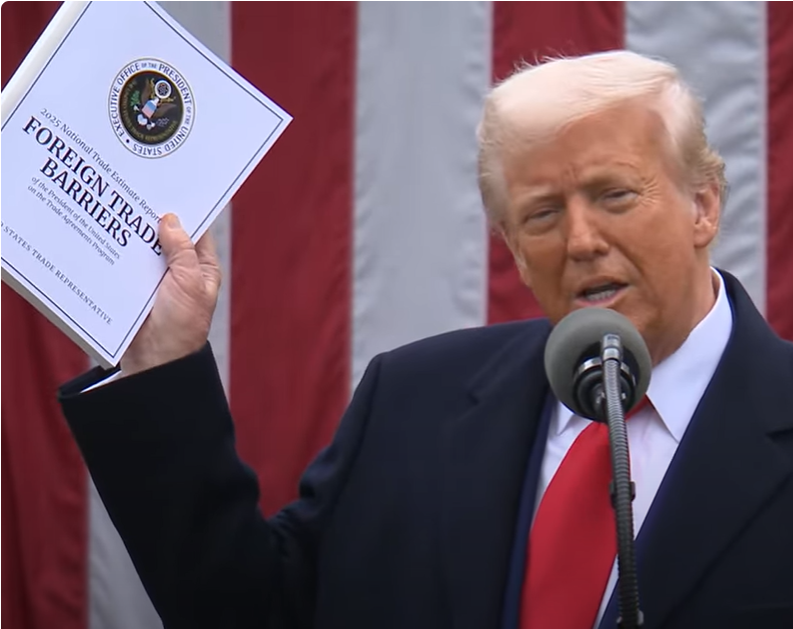
The Trump administration is relying on the 2025 National Trade Estimate Report on Foreign Trade Barriers, which the US Trade Representative published on 31 March 2025, to inform its reciprocal rates.