

The EU spent 2025 cutting its green rulebook, while the US moved more decisively to unwind ESG and DEI initiatives, and companies around the world faced rising uncertainty over greenwashing.
Shutterstock.com/Babooo0
If 2024 was about expanding green rules and refining corporate ESG reporting, 2025 was the year of rolling back the green agenda. In Brussels, the Omnibus overhaul dominated rulemaking, and in the US, Donald Trump’s day-one executive orders signalled an abrupt policy reversal on climate and equalities.
Greenwashing risks continued to mature and companies trying to keep pace with shifting rules had little respite. Businesses around the world were left to reassess what "safe" sustainability messaging really looks like in a fast-changing legal landscape.
The Omnibus year
2025 was the year the EU reversed course on some of its biggest achievements of the past decade, beginning with the Omnibus reforms in which it took a scythe to its ESG framework, following up with an overhaul of its AI, data protection and cybersecurity rules.
The European Commission published the Omnibus (I) proposal in February in an effort to simplify existing rules for businesses, triggering 10 months of negotiations with industry groups and state governments. In December, the package of reforms was finalised and rubber-stamped by MEPs. Read about the final agreement here.
Throughout 2025, the Omnibus overhaul caused considerable confusion with many businesses pushing back due to the investments they had already made to ensure compliance. The Omnibus dominated conference panels and triggered complaints from NGOs, which were upheld by the EU Ombudsman.
Lexology PRO revealed that oil and gas companies as well as US lobbyists were given access to private discussions on the Omnibus while it was being developed. The final result was heavily influenced both by US trade pressures and the demands of hard-right MEPs, who pushed through a version that takes the cuts to the ESG rulebook far further than originally proposed by the European Commission.
Trump cancels ESG and DEI
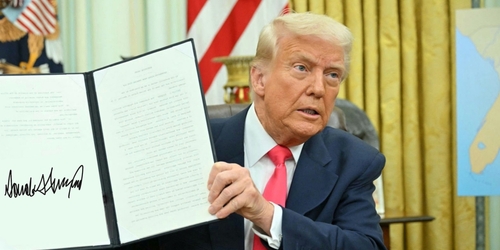
Donald Trump’s return to office in January saw the US government conduct an about-face on its environmental agenda and approach to equalities legislation. Among a slew of day one executive orders, Trump banned diversity, equity and inclusion (DEI) initiatives in federal agencies, ordered the withdrawal of the US from the Paris Agreement, and declared a “national energy emergency”, promising to revitalise coal-fuelled power.
In June, Trump’s “One Big Beautiful Bill Act” reshaped the tax incentives that had spurred a boom in clean energy infrastructure across the US.
The bill included dramatic changes for the US solar and wider power industries, and a rollback of parts of Joe Biden’s landmark climate law, the Inflation Reduction Act (IRA).
Lexology PRO’s analysis found that overall enforcement by the US Environmental protection Agency in 2025 fell by 64% year-on-year.
Waiting for the EUDR
While the Omnibus predominantly focused on reforming the CSRD and CSDDD, the EU also attempted to separately pare back its landmark deforestation rules.
The Deforestation Regulation (EUDR) had been intended to impose stringent due diligence rules on businesses importing certain goods, and had been delayed by a year, in December 2024, meaning it was due to become effective in December 2025. Companies caught by the law were not helped by a chaotic back and forth that saw the European Commission threaten to delay the rules for a second time, withdraw this threat, and then be forced to delay the rules by MEPs.
In May, the EU executive had announced a series of changes to make EUDR compliance easier for businesses. Under an agreement to delay the rules for a second time, MEPs demanded a review of the regulation in early 2026, which could see the EUDR further simplified.
Greenwashing trends
Greenwashing litigation and regulatory enforcement continued to evolve as a threat to businesses throughout the year. Among the most high-profile cases saw TotalEnergies penalised by a French court, while Germany, Australia and the UK were among the jurisdictions experts highlighted as hotspots for greenwashing litigation.
In the US, B2B greenwashing litigation emerged as a risk following several high-profile cases. Lawmakers also targeted Big Tech companies over their use of international energy purchases, as well as carbon offsets, which they said were both misleading and fed into a political agenda that undermined US fossil fuel companies.
Certification schemes came under increasing scrutiny in high profile cases in the UK and Australia, raising doubts for businesses over the value of using such schemes to mitigate against greenwashing risk.