

Cryptocurrency exchange platform OKX has pleaded guilty to operating an unlicensed money transmitting business in the US.
Shutterstock.com/HeidiBesen
Seychelles-based Aux Cayes Fintech, trading as OKX, entered a plea agreement with the Department of Justice (DOJ) yesterday, admitting it had violated federal anti-money laundering (AML) laws and failed to register with relevant authorities.
Federal prosecutors imposed an $84.5 million fine on OKX and ordered it to forfeit over $420 million in fees earned from US customers over the investigated period, amounting to nearly $505 million in penalties. It did not receive voluntary disclosure credit but was awarded partial credit for cooperating with prosecutors on receiving a grand jury subpoena.
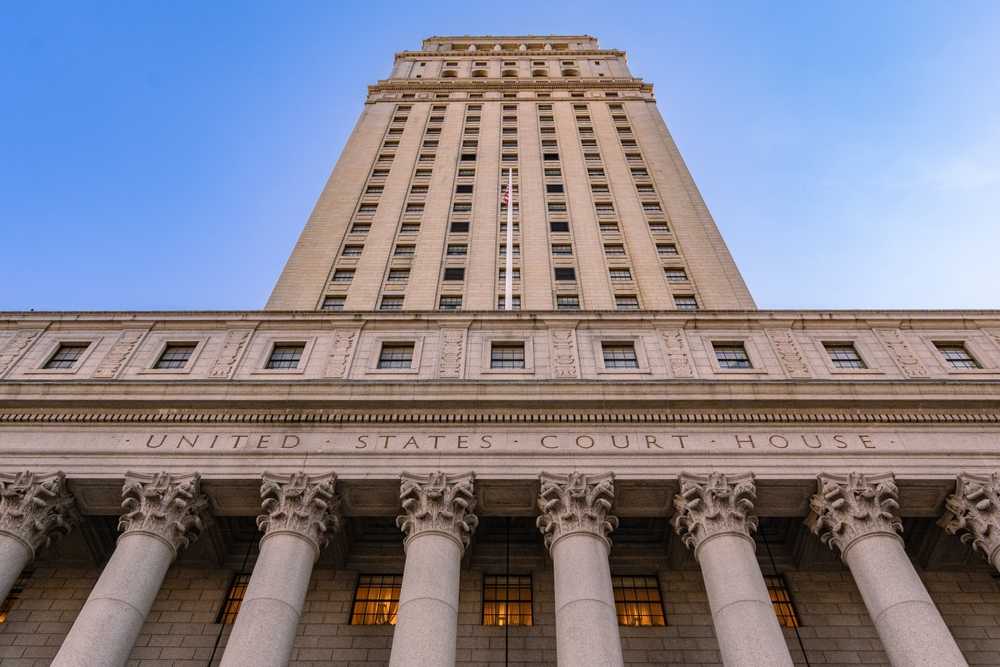
The plea was heard before federal judge Katherine Polk Failla in Manhattan federal court.
OKX pleaded guilty to operating an unlicensed money transmitting business from at least 2017. Financial institutions with substantial operations in the US must register with the Treasury Department’s Financial Crimes Enforcement Network (FinCEN) and must comply with AML laws including the Bank Secrecy Act, which involves filing suspicious activity reports and maintaining adequate AML and know-your-customer (KYC) programmes.
OKX’s official policy has excluded Americans from transacting on its exchange since 2017, but the DOJ’s investigation found OKX not only had customers in the US but was actively pursuing both retail and institutional customers there. These customers engaged in over $1 trillion worth of transactions through OKX after 2018, generating hundreds of millions of dollars in trading fees and profits.
The platform’s official policy prohibiting Americans from its platform resulted in OKX not registering with FinCEN, despite having substantial US operations. The DOJ said OKX was “fully aware” US customers could and did create trading accounts.
Despite officially blocking customers with US-located IP addresses from trading, prosecutors said OKX was aware its restrictions could be easily circumvented with readily available and cheap virtual private network (VPN) technology. The platform also actively marketed itself in the US, notably sponsoring the Tribeca Film Festival.
Prosecutors also said OKX did not have an adequate KYC process, meaning it could not identify its customers – including those subject to US Treasury sanctions.
OKX’s platform was therefore used by some as a vehicle for money laundering, with prosecutors identifying more than $5 billion in suspicious transactions and illicit proceeds.
“For over seven years, OKX knowingly violated anti-money laundering laws and avoided implementing required policies to prevent criminals from abusing our financial system,” US attorney for the Southern District of New York Matthew Podolsky said in a statement.
While acknowledging it had not obtained a licence to operate as a money transmitter, OKX said “legacy compliance gaps” meant US customers had traded on its platform. These customers were a “small percentage” of OKX’s global customer base, it maintained.
“Regulatory compliance is at the core of our business operations, and we take our responsibility to set the standard for responsible innovation seriously,” the company added.
Under the plea agreement, OKX will maintain an external compliance consultant at its own cost to advise on policies to prevent Americans accessing its platform through February 2027. It has also agreed to continued cooperation with the US Attorney’s Office.
OKX said it will continue strengthening its KYC and customer risk rating procedures, while expanding its due diligence programme and implementing “industry-leading” AML and sanctions compliance tools. It will also build a 150-employee financial crime and blockchain intelligence team with legal enforcement and regulatory agency experience, it said.
OKX operates the fourth-largest crypto spot and derivatives exchange in the world, according to CoinMarketCap – after Binance, Bybit and Coinbase. This involves a daily spot trading volume of around $5.5 billion and a daily derivatives trading volume worth approximately $40 billion, according to court documents.
The platform allows users to place orders for spot trades in over 300 cryptocurrencies, including Bitcoin and Ethereum, while also placing orders for derivative products tied to the value of Bitcoin.
An unidentified US institutional customer conducted some $1.2 trillion in spot and derivatives transactions between 2019 and 2023 on the platform, according to court documents. In 2020, two of OKX’s three largest customers were US institutional customers.
OKX has an affiliate US-based cryptocurrency exchange, OKCoin USA, which is not associated with the case. It is registered with FinCEN as a money services business.
Counsel to OKX
Skadden, Arps, Slate, Meagher & Flom
Partners David Meister and Chad Silverman in New York