

Regulatory data reveals how deforestation, mining and indigenous rights came to dominate enforcement against companies in 2025 as Brazil prepared to host the global climate summit.
Key takeaways
- Lexology PRO data shows a spike in environmental enforcement.
- Multiple authorities have stepped up their regulatory activity, driven by a focus on illegal deforestation and mining.
- Businesses operating in the country face increased enforcement risk.
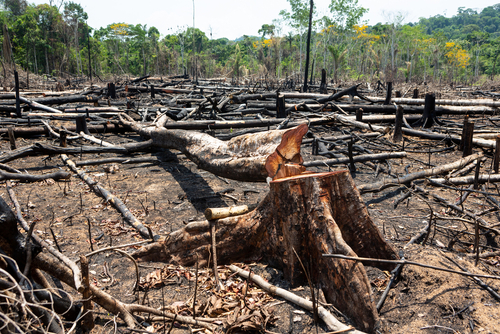
Shutterstock.com/PARALAXIS
World leaders and delegates are meeting in the northern Brazilian city of Belém for COP30, the annual UN climate summit at which the sustainability credentials of the hosts inevitably attract media and NGO scrutiny.
The Brazilian government claims it is a leader in the fight against climate change, and the summit is a chance to underline those credentials. While critics argue that the scale of deforestation, cattle farming and oil extraction in the country undermine that claim, the data suggests that regulators have made it a clear priority to enforce environmental laws over the last year.
Lexology PRO analysis of regulatory data gathered by Scanner reveals that federal enforcement activity in Brazil focusing on the environment and indigenous rights surged in the buildup to the summit, with businesses particularly under scrutiny for offences linked to deforestation and wildlife protection
Enforcement by the federal Institute for the Environment and Renewable Natural Resources (IBAMA) dramatically increased year-on-year, with eight total actions announced in September 2024, and 25 in September 2025, capping a steady rise in enforcement.
At the same time, the focus of Brazil’s Federal Prosecutor’s Office reflects a similar focus, with actions related to environmental crime, wildlife protection, mining and indigenous rights far outstripping the rest of its activity. The previous year, these environmental issues constituted a minority of enforcement actions.
IBAMA
IBAMA is a federal agency under the Ministry of Environment. Its role is effectively to police Brazil’s climate and nature protection laws; the Lula administration vowed to strengthen the authority when it took office in 2023.
Lexology PRO’s analysis shows that while enforcement grew steadily to a peak in summer 2025, no single issue dominated – although there were specific enforcement surges related to, for example, illegal mining and wildlife protection.
Many of the issues IBAMA focuses on are interlinked, as an action to uphold the territorial rights of indigenous people will often also be one that tackles illegal deforestation or mining in those territories. One of the issues that grew most as an enforcement area was wildlife protection, with numerous actions in 2025 to protect endangered species. Many of these actions also involved preventing encroachment on protected areas of the Amazon and other territories.
Federal Prosecutor’s Office
Brazil’s Federal Prosecutor’s Office (MPF) has a far broader remit than IBAMA; its enforcement activity therefore encompasses actions ranging from fraud and corruption to planning disputes and data protection. By separating all enforcement related to environmental crime, indigenous rights, wildlife and mining, it is clear how much these issues grew to dominate its focus through 2025.
The data suggests that enforcement actions by the MPF grew overall between 2024 and 2025, with the growth dominated by actions related to nature and the environment.
Preparing for a clean COP
Official data indicates that deforestation in the Amazon fell by approximately 11% between August 2024 and July 2025. Some reports even suggest a 74% reduction compared to 2022 levels, with deforestation reaching the lowest level in 17 years. There was also a steep drop in new mining sites through 2024, suggesting harmful and criminal business practices have reduced – at least in relation to ESG.
In the buildup to COP30, organisers were criticised for failing to uphold commitments (and constitutional requirements to consult with indigenous communities. This pressure, and related court rulings, may have been a factor behind some of the rise in enforcement to protect indigenous lands and stop deforestation.
Many of the individual enforcement actions behind the data are relatively small scale and relate to low-level criminality, such as trafficking in endangered species. However there are also numerous larger fines and penalties related to larger scale wrongdoing by companies, including carbon credit schemes.
For businesses operating in Brazil, the rise in enforcement demonstrates how authorities have stepped up their focus on protecting the environment, and the country’s claimed position as a climate leader.