

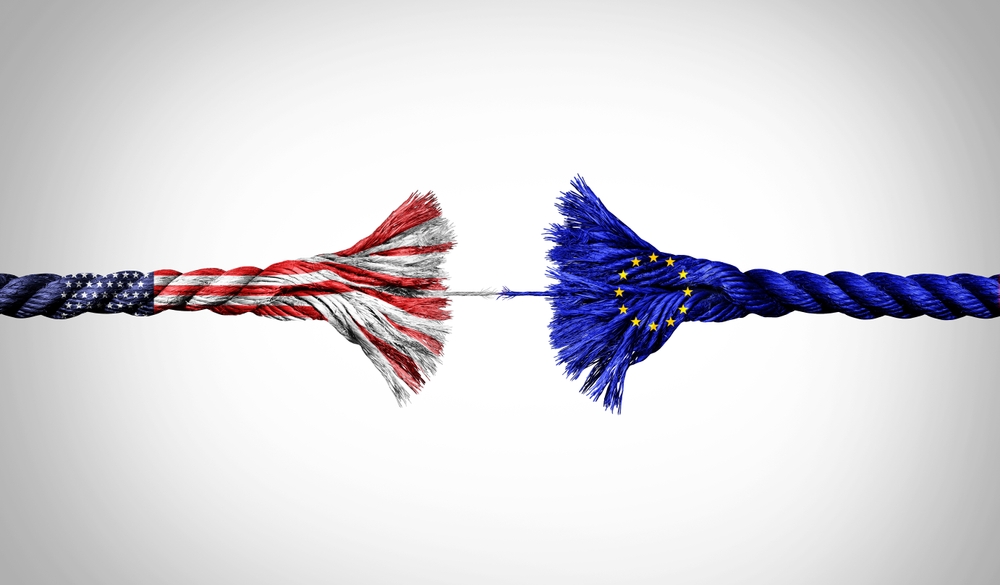
The US and EU have announced a framework trade agreement establishing a 15% baseline tariff on most European goods. Despite being hailed as the “biggest trade deal ever,” significant details are yet to be negotiated.
Shutterstock.com/Lightspring
In what has become his standard practice, US President Donald Trump announced the trade deal on Truth Social on 27 July 2025. European Commission President Ursula von der Leyen responded with her own official statement.
Both leaders agreed on one point: this represents the “biggest trade deal ever.”
The stakes behind this highly anticipated trade deal were high. Bilateral trade between the European Union (EU) and US reached US$976 billion in 2024, according to the Office of the US Trade Representative.
Following a pattern established in Trump's other trade agreements with the UK, Vietnam, Indonesia, the Philippines, and Japan, specifics of the EU deal remain scarce. Lexology PRO takes a look at what we know so far about the US-EU deal.

15% is the new tariff rate
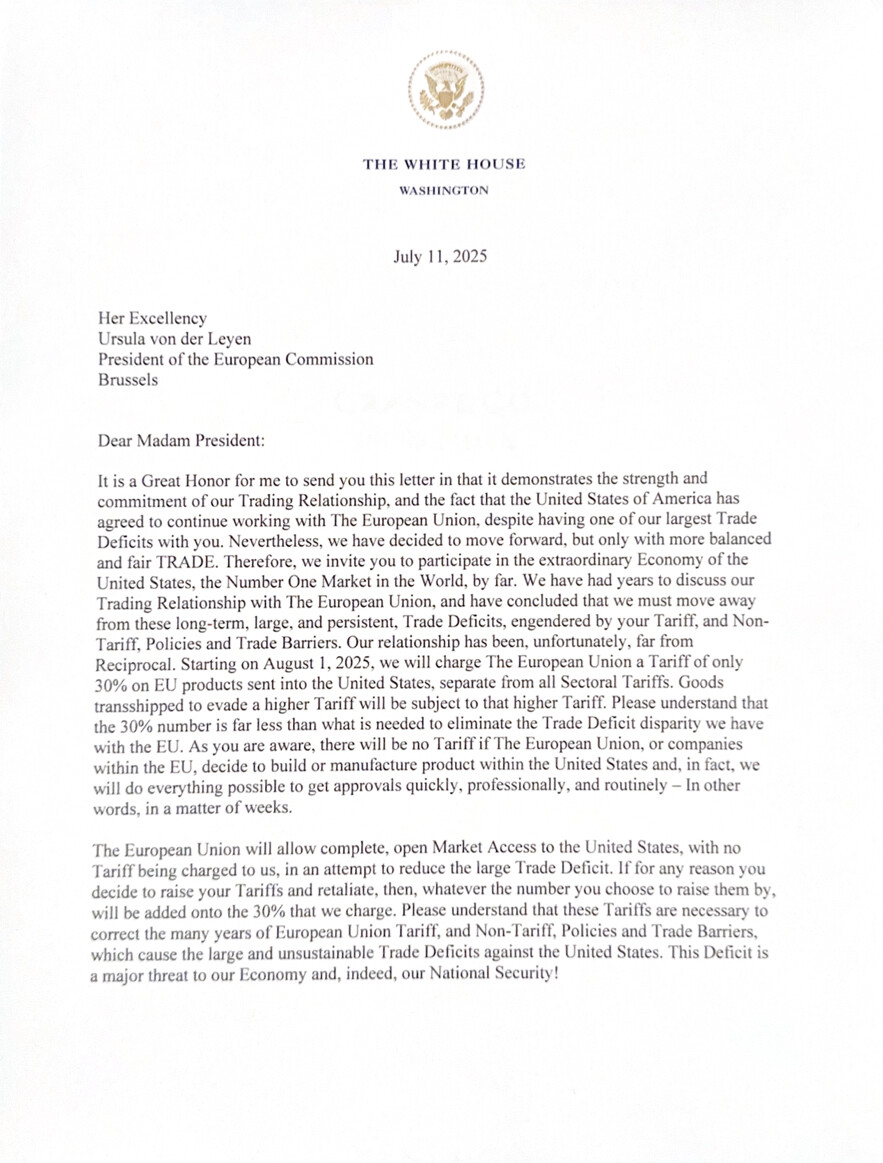
The centrepiece of the agreement establishes a 15% tariff rate on the vast majority of EU goods entering the US, including cars, semiconductors, and pharmaceuticals. This represents a significant reduction from the 30% rate Trump had threatened to impose on 11 July 2025.
Von der Leyen clarified that this is a single, uniform rate that will not be subject to tariff “stacking,” or the practice of adding multiple tariffs on the same product.
Certain strategic goods will benefit from “zero-for-zero” tariff treatment, including all aircraft and component parts, certain chemicals, generic medicines, semiconductor equipment, selected agricultural products, natural resources, and critical raw materials. The EU is working to expand this zero-tariff list.
According to Trump's announcement, EU Member States are now “opened up to trade” at zero-tariff rates for US goods. The new tariff regime marks a departure from the historical trading relationship, where the US and EU traded under most-favoured nation rates without a comprehensive free trade agreement.
EU agrees to investment commitments
Beyond tariff adjustments, the agreement includes substantial procurement and investment commitments.
Trump announced that Brussels agreed to purchase US$750 billion worth of US oil, gas, nuclear fuel, and semiconductors. Von der Leyen provided more detail, explaining that the EU will spend US$250 billion annually through 2027, with US energy supplies replacing Russian oil and liquefied natural gas (LNG) in European markets.
The EU also committed to invest an additional US$600 billion in the US, including purchases of military equipment, according to the US president. This investment structure mirrors arrangements recently agreed with Japan.
More details to be hashed out
Despite the fanfare, significant questions remain about the agreement's implementation. The accord itself is described as a “framework deal” rather than a fully negotiated trade agreement. The coming weeks will prove crucial as negotiators work to flesh out the framework's details and address the remaining uncertainties that could affect billions in transatlantic trade.
Steel and aluminium present a particular source of confusion. Trump indicated that the existing 50% tariff on these products would remain for EU goods, while von der Leyen stated that steel tariffs would be replaced with a quota system.
The wine and spirits sector was notably excluded from the agreement and remains subject to future negotiations.
Additional sectoral uncertainty exists, particularly regarding pharmaceuticals. During a press conference with UK Prime Minister Keir Starmer on 28 July 2025, Trump hinted that the US may not impose high tariffs on British drugs. Asked whether his plans for a tariff on medicines would affect the UK, the US president told reporters: “We will be announcing on pharmaceuticals sometime in the very near future. We have a very big plan on pharmaceuticals.”
Mixed reactions from EU leaders
The agreement has generated varied responses across European capitals.
German Chancellor Friedrich Merz welcomed (German language only) the deal, noting it avoids “an unnecessary escalation in transatlantic trade relations.” German automotive manufacturers will particularly benefit, seeing tariffs reduced from 27.5% (through tariff stacking) to the new 15% rate, Merz highlighted.
Reactions elsewhere were more sceptical. The French Prime Minister called it a “dark day” (French language only) for the EU, while the Dutch Minister for Foreign Trade described the agreement as “not ideal.”
Ireland faces a unique challenge as a result of the UK and EU reaching separate deals with the US. Northern Ireland can access US markets at the 10% tariff rate established under the UK deal, while the Republic of Ireland faces the higher 15% EU rate. Neale Richmond, a minister in Ireland's foreign affairs department, told BBC radio: “We're not exactly celebrating this. . . . It's probably the least bad option.”