

The US Supreme Court has stayed a district court’s order reinstating former US FTC Commissioner Rebecca Slaughter, pending further review. Days earlier, an appeals court had denied a stay.
Key takeaways
- US Supreme Court Chief Justice John Roberts sided with the Trump administration and granted an emergency stay to pause US FTC Commissioner Rebecca Slaughter’s reinstatement.
- The stay overrides the DC Circuit’s refusal to grant a stay.
- Slaughter was fired in March 2025.
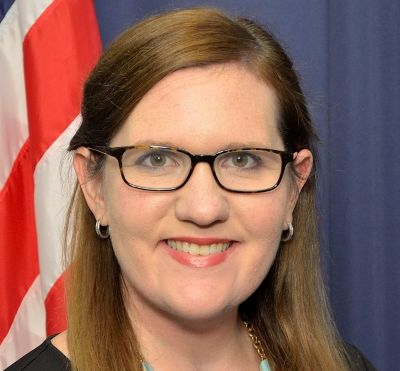
Courtesy photo.
In today’s order, Roberts stayed a July 2025 order from the US District Court for the District of Columbia that had ruled that Slaughter’s firing was without cause and illegal. The district court ordered that Slaughter be reinstated as a US Federal Trade Commission (FTC) commissioner.
The US Court of Appeals for the District of Columbia Circuit on 2 September 2025 denied the Trump administration’s motion to block Slaughter’s reinstatement pending appeal. Slaughter was active during her short stint back in her role, including issuing a dissenting statement in the FTC’s decision to abandon its appeal of the vacatur of its Non-Compete Clause Rule.
Slaughter’s response to the Trump administration’s application for a stay must be filed by 15 September 2025, according to the US Supreme Court’s order.
In March 2025, US President Donald Trump fired FTC Commissioners Slaughter and Alvaro Bedoya, who are both Democrats.
Initially, they both challenged their firings. However, Bedoya later formally resigned from the FTC to obtain other employment.
The Trump administration, including fellow Republicans and FTC Chair Andrew Ferguson and FTC Commissioner Melissa Holyoak, filed an emergency motion in the DC Circuit for a stay pending appeal. The DC Circuit denied that request, reasoning that it would upend 90-year-old case law.
“That motion must be denied,” according to the majority opinion in the DC Circuit’s order. “The government has no likelihood of success on appeal given controlling and directly on point Supreme Court precedent.”
That precedent is the US Supreme Court’s 1935 decision in Humphrey’s Executor v US, which upheld the constitutionality of the FTC’s for-cause removal protection for FTC commissioners. Under the Federal Trade Commission Act 1914, an FTC commissioner can only be removed by the president “for inefficiency, neglect of duty, or malfeasance in office.”
90-year-old precedent has staying power
The DC Circuit held that, “Over the ensuing decades—and fully informed of the substantial executive power exercised by the Commission—the Supreme Court has repeatedly and expressly left Humphrey’s Executor in place, and so precluded Presidents from removing Commissioners at will. Then just four months ago, the Supreme Court stated that adherence to extant precedent like Humphrey’s Executor controls in resolving stay motions. To grant a stay would be to defy the Supreme Court's decisions that bind our judgments. That we will not do.”
According to the order, the Trump administration’s “key substantive question” on appeal is whether the FTC Act’s for-cause removal requirement violates the president’s Article II power. The majority held that the government would likely not prevail on that argument.
“The government is highly unlikely to succeed on appeal because that exact question was already asked and unanimously answered by the Supreme Court adversely to the government’s position 90 years ago in Humphrey’s Executor,” the court wrote.
“In Humphrey’s Executor, the Supreme Court unanimously held that the Federal Trade Commission Act does not violate Article II by limiting the President’s power to remove Commissioners except for cause. In so ruling, the Supreme Court held that it is ‘plain under the Constitution that illimitable power of removal is not possessed by the President in respect of officers’ wielding power of what it then termed a ‘quasi-judicial’ or ‘quasi-legislative’ ‘character,’” the DC Circuit added.
The appeals court also wasn’t persuaded by the Trump administration’s claim that the present-day FTC exercises more powers than the court understood the FTC to have in 1935. According to the majority’s order, the FTC still investigates potential violations of federal law by issuing subpoenas and seeking their enforcement.
Likewise, the 1935 and current FTC prosecutes violations by issuing administrative complaints and promulgates rules, the DC Circuit held. Even the FTC’s power to prosecute or seek monetary penalties could be considered executive but doesn’t render FTC commissioners’ removal protection unconstitutional, according to the court.
Recent SCOTUS stays distinguished
The Trump administration also argued that recent US Supreme Court stay orders in Trump v Wilcox, which challenges the firing of a National Labor Relations Board member, and Trump v Boyle, which challenges the removal of Consumer Product Safety Commission members, override Humphrey’s Executor. However, the DC Circuit held yesterday that those cases are not analogous to Slaughter’s claim.
“In those cases, an extension of Humphrey’s Executor to a new context would have been required for the removed officials to prevail on the merits. In contrast, the present case involves the exact same agency, the exact same removal provision, and the same exercises of executive power already addressed by the Supreme Court in Humphrey’s Executor and subsequent decisions, and so is squarely controlled by that precedent.”
In a dissent, Judge Neomi Rao said a stay of the district court’s order should be granted. Rao said that the government would likely be successful in its claims.
“In sum, the government is likely to succeed in its appeal of the district court’s injunction, which orders relief that exceeds the Article III judicial authority and intrudes on the President’s exercise of executive power,” she wrote.
On X, Slaughter said she was excited about returning to the FTC.
Updated to reflect SCOTUS order dated 8 September 2025 and Slaughter’s actions during her brief reinstatement.
Counsel to Rebecca Kelly Slaughter
Clarick Gueron Reisbaum
Partner Aaron Crowell and Gregory Clarick in New York are assisted by David Kimball-Stanley
Protect Democracy Project
Special counsel Amit Agarwal and counsel Beau Tremitiere and Jared Davidson in Washington, DC and director Benjamin Berwick in Watertown, Massachusetts
Harvard Law School
Professor Laurence Schwartztol in Cambridge, Massachusetts